Impeccable Sunny-Side Up Egg: Protocols for a Liquid Yolk
The perfect fried egg. Professional techniques to coagulate the albumen while preserving the vitelline membrane and a pristine liquid yolk.
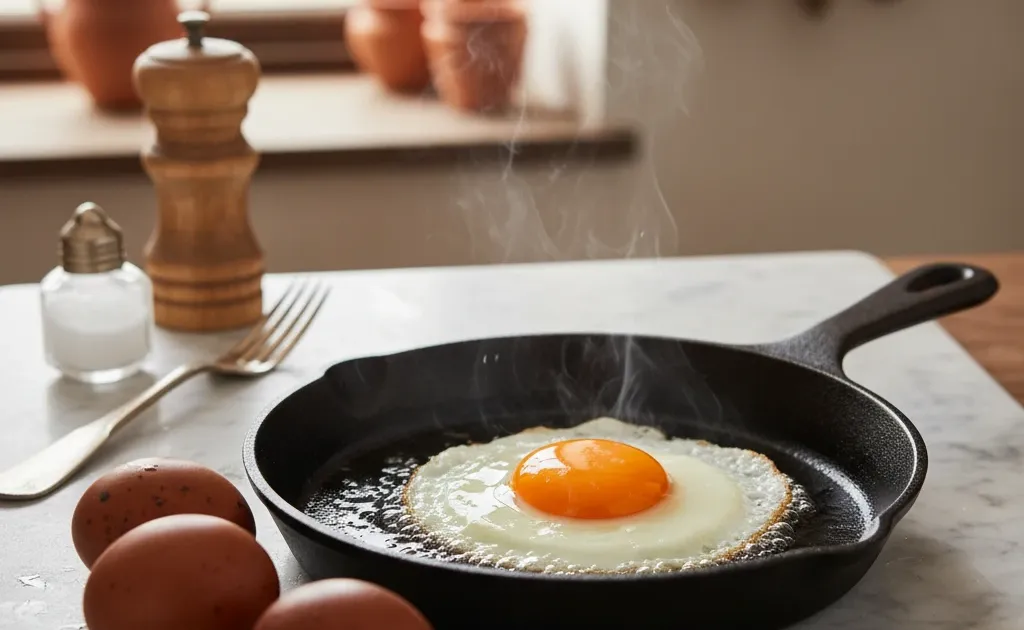
Introduction: The Sublime Precision of a Liquid Yolk
There is a profound gastronomic satisfaction in the execution of a perfect sunny-side up egg (uovo all’occhio di bue). A tender, opaque white serves as the structural frame for a vibrant, liquid yolk, poised to flow at the slightest touch of a fork. It is one of the most fundamental yet revered preparations in the kitchen—equally suited for a sophisticated brunch, elevating a pasta dish, or as a high-protein accompaniment to seasonal vegetables.
However, this apparent simplicity is technically deceptive. How often has the vitelline membrane ruptured prematurely upon entering the pan? Or how many times, in an attempt to cook that persistent layer of raw albumen on the surface, have you inadvertently solidified the yolk?
Culinary frustration ends here. This guide explores the infallible protocols used by chefs to ensure an impeccable result every time. These are precise, controlled gestures that transform the frying of an egg into a predictable and rewarding science.
Protocol No. 1: Preventing Vitelline Rupture (The Ramekin Method)
The most volatile moment in the process—the primary cause of a broken yolk—is the transition from the shell to the heated lipid environment of the pan. The common error is cracking the egg directly against the rim of the pan and dropping it from an excessive height. A minor miscalculation in kinetic force, and the structural integrity of the yolk is compromised.
The solution is a simple intermediary step: the “Zero-Stress” technique.
- The Technique: Utilise a small ramekin, a coffee cup, or a saucer. Gently crack the egg into this vessel first. This provides total control. You can visually inspect the vitelline membrane for integrity and ensure no shell fragments have contaminated the proteins. When the pan is ready, simply slide the egg with minimal velocity from the ramekin into the pan.
- The Result: How do you prevent the yolk from breaking? This method reduces the risk of rupture to near zero. It is a five-second procedural addition that secures a perfect aesthetic and structural starting point.
Optimal Albumen Coagulation: The Steam-Confinement Secret
Here lies the second technical dilemma: the base of the egg is set, the yolk is liquid, but the surface surrounding the yolk remains a translucent, unappealing film of raw albumen. The instinct is to increase the thermal load, but this invariably scorches the base. Some attempt to flip the egg (over-easy), but then it is no longer a true sunny-side up.
The secret to achieving a fully coagulated white with a liquid yolk is the strategic use of steam.
- The Steam Technique: Once the base of the albumen has turned opaque (approximately one minute over medium-low heat), pour a single tablespoon of water into the pan, away from the egg, against the hot perimeter. Immediately seal with a lid.
- The Mechanism: The water in contact with the hot surface generates instantaneous steam. The lid traps this moisture, creating a controlled, humid environment that flash-cooks the surface proteins of the albumen in 30–40 seconds without affecting the viscosity of the yolk. The result is a tender, uniform white and a warm, perfectly fluid yolk.
Lipid Selection: Butter, Olive Oil, or the Chef’s Hybrid?
The choice of cooking fat is not merely a technicality; it defines the flavour profile and the final texture.
- Extra Virgin Olive Oil: The hallmark of the Mediterranean tradition. When used at a medium-high temperature, it produces the classic “lacy” edges—crispy, golden, and aerated. For a cleaner, smoother finish, maintain a lower temperature.
- Butter: Butter introduces a rich, nutty depth and an incomparable silkiness. An egg basted in foaming butter remains tender and delicate. Caution is required to avoid the burning of milk solids; the butter should foam gently (beurre moussant), never blacken.
- The Professional Hybrid (Oil and Butter): To achieve the best of both worlds, many chefs utilise a blend. A dash of oil, which possesses a higher smoke point, prevents the butter from burning, while a small knob of butter provides the desired creaminess and aroma. It is the definitive combination for a perfectly fried egg.
Conclusion: Mastery of the Fried Egg
Performance anxiety at the hob is a thing of the past. With these three technical adjustments—the ramekin for structural control, the steam-confinement method for even coagulation, and the conscious selection of lipids—you possess the framework to master this dish.
Preparing a sunny-side up egg becomes a quiet ritual, a controlled act that guarantees a sophisticated result. Enjoy the perfection of that liquid yolk, ready to be mopped up with artisanal sourdough: you have achieved culinary excellence.