Eggshell Colours: Genomics and Biochemistry
What biological processes determine shell colour? A scientific analysis of oological pigmentation and the debunking of nutritional myths.


Technical Insight
This article forms part of our master compendium:
Choosing and Understanding EggsIntroduction: The Nutritional Paradox of the Shell
The colour of an eggshell, ranging from pure white to dark brown, through to blue and olive green shades, is a direct expression of avian genetic biodiversity. However, a persistent nutritional misunderstanding exists: the erroneous belief that colour influences quality. Shell colour is determined exclusively by the breed’s genome and presents absolutely no correlation with the organoleptic profile or nutritional value of the product. The nutritional framework depends directly and measurably solely on the animal’s diet and housing conditions.
A white-shelled egg and a brown-shelled one, given the same husbandry and diet, are biochemically identical. The subconscious association of brown with concepts like “rustic” or “wholemeal” is a perceptual bias, sometimes indulged by commercial dynamics, but entirely devoid of oological foundation.
The Biochemistry of Pigmentation: Protoporphyrin and Biliverdin
The entire chromatic range derives from the synthesis of two specific organic pigments, both metabolites stemming from the degradation of haem (the complex structure at the base of haemoglobin). Their secretion occurs in the distal portion of the hen’s oviduct, defined as the shell gland or uterus.
- Protoporphyrin IX: This is the precursor responsible for brown, red, and pink colorations. The uterus secretes this pigment in abundance only in the very final hours of the calcification process (which lasts approximately 20 hours overall). It acts physiologically as a surface coating applied over the already formed mineral structure. For this reason, the inner face of a brown eggshell is invariably white.
- Biliverdin (and zinc chelates): This is the pigment underlying blue and azure pigmentations. Unlike protoporphyrin, biliverdin is secreted from the initial stages of calcareous deposition and incorporated directly into the calcium carbonate matrix. The pigment permeates the entire thickness of the structure, making the shell blue on both the outer and inner surfaces.
Genetic Mapping: Phenotypes and Breeds
Genetics precisely determines the type of pigment synthesised and the relative timing of secretion, defining the unmistakable chromatic signature of each breed.
White and Tinted Eggs
The white shell represents the baseline phenotype, characterised by the total genetic inhibition of pigmentation. It is the distinctive trait of high-yielding Mediterranean breeds such as the Leghorn (Livornese) (a rural excellence frequently championed in Lazio’s zero-mile supply chains), the Padovana, and the Sicilian Polverara. An extremely diluted secretion of protoporphyrin IX generates the pinkish or cream shades typical of dual-purpose breeds like the Sussex, the Plymouth Rock, or the peculiar Silkie (Moroseta).
Brown Eggs
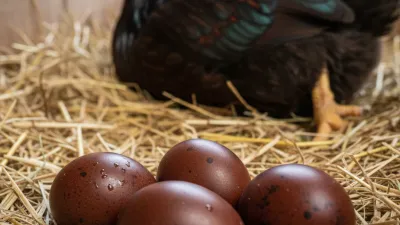
A massive concentration of protoporphyrin defines brown eggs. Breeds like the Rhode Island Red or the Barnevelder produce a standard reddish-brown pigmentation, widely distributed commercially. The pinnacle of chromatic intensity belongs to the Marans, which deposits extremely dense layers of pigment generating dark chocolate-coloured eggs, often featuring an appreciated glossy finish and shells of a superior structural calibre.
Blue Eggs
Biliverdin-based pigmentation is restricted to specific breeds of South American origin. The progenitor is the Araucana, an ancient Chilean breed lacking coccygeal vertebrae (rumpless). From these genetics derive the Ameraucana (selected in the United States to standardise productivity) and the Cream Legbar, highly specialised layers for the production of pastel blue-shelled eggs.
Olive Green Eggs (The Hybrids)
The green shell is not the product of a pure breed, but a hybrid phenotype resulting from planned genetic crosses. It manifests when the dominant gene responsible for biliverdin (blue) is crossed with a genetic line selected for protoporphyrin (brown). The biliverdin permeates the entire thickness of the shell, while the protoporphyrin is deposited superficially like paint. This optical overlap generates the green shade. These hybrids, termed Olive Eggers in zootechnical jargon, commonly derive from the first-generation (F1) cross between a dark brown egg line (Marans) and a blue egg line (Araucana/Ameraucana).
Dynamics of Chromatic Alteration and Health Markers
The darker speckles or spotting frequently visible on brown shells are generated in the terminal phase of laying. As the egg rotates in the terminal tract of the oviduct, slight variations in the speed of descent or in the secretion of the uterine ducts cause localised accumulations of protoporphyrin, creating irregular and unique morphological patterns.
Furthermore, pigmentation intensity is a dynamic physiological parameter:
- The Age of the Subject: Hens in the advanced stage of their productive cycle lay eggs of greater specific weight and size. Because the shell gland synthesises a constant amount of pigment for each cycle, the “paint” is distributed over a larger calcareous surface, returning a visually diluted tone.
- Stress and Pathologies: Acute thermal fluctuations, sudden alterations in the photoperiod, or handling stress inhibit the secretory efficiency of the uterus. Suddenly pale, striated, or depigmented shells represent a timely clinical marker for the professional farmer regarding the welfare status of their flock.
Shell colour constitutes a fascinating genetic marker, useful for tracing the genealogy of the animal, but irrelevant from a bromatological standpoint. The true parameter of quality resides solely in the freshness of the product (measurable empirically via the density of the ovomucin in the albumen) and in the rigorous housing methodologies, verifiable through the printed alphanumeric traceability. Favouring eggs from outdoor farming systems, preferably supporting micro-supply chains and local agriculture, represents the most reliable metric for evaluating the wholesomeness and agri-food value of what we bring to the table, far beyond the visual appeal of the shell.