Does Yolk Colour Indicate Quality? The Biochemical Truth
Is a deep orange yolk truly superior to a pale yellow one? We analyse the biochemistry of carotenoids to debunk a widespread food myth.


Technical Insight
This article forms part of our master compendium:
Choosing and Understanding EggsIntroduction: The Cognitive Bias of the Yolk
When cracking an egg, the predominant visual element is undoubtedly the vitelline globe (the yolk). The collective imagination tends to associate a deep, tawny orange yolk with a genuine, “free-range”, and nutritionally superior product. Conversely, a pale straw-yellow yolk often arouses unjustified suspicion, being perceived as “dull” or of poor quality.
This correlation between yolk colour and nutritional value is one of the most deeply rooted cognitive biases in gastronomic culture. We are culturally conditioned to believe that chromatic intensity is a direct indicator of animal health and nutritional richness.
In poultry science, the reality is markedly different: the yolk’s chroma has a negligible impact on the egg’s macromolecular profile, the true welfare of the hen, or its freshness. This article will explore the biochemistry of pigmentation to understand what genuinely drives this variation and why the yolk’s aesthetics should no longer deceive the conscious consumer.
The Biochemistry of Pigmentation: The Role of Carotenoids
The yolk’s chromatic palette, which fluctuates from pale yellow to striking orange, is determined by the bioaccumulation of a class of fat-soluble organic pigments: carotenoids. Laying hens cannot synthesise these pigments autonomously; their transfer into the yolk depends entirely on the ingested dietary ration.
The molecules primarily responsible for this coloration are xanthophylls (specifically lutein and zeaxanthin).
- Xanthophyll-rich foraging: Rations based on yellow maize, alfalfa (Medicago sativa), and fresh forage species are naturally abundant in lutein and zeaxanthin. Pasture-raised hens, which supplement their diet by pecking at wild flora, tend to transfer these lipid molecules into the ovary, generating an intense orange yolk.
- White cereal-based rations: Cereals such as wheat, barley, or sorghum are poor in carotenoid pigments. Hens fed predominantly on these milled grains will lay eggs with a pale yellow yolk.
In a natural ecosystem, vitelline chroma is therefore a simple biomarker of the types of vegetation the animal has consumed. However, an industrial factor complicates this reading.
Zootechnical Standardisation: Additive Pigmentation
Is it possible to artificially intervene on chromatic intensity? Modern zootechnics does this systematically. The feed industry, fully aware that consumers “eat with their eyes”, has standardised methods to integrate colour in a targeted manner, regardless of the housing method.
This is achieved by integrating specific additives into conventional feeds:
- Pigments of natural origin: Extracted from raw materials such as marigold petals (a flower extremely rich in lutein for yellow tones) or paprika extracts (to shift towards red-orange).
- Synthetic pigments: Molecules like canthaxanthin or apocarotenoate, synthesised in a laboratory to replicate the effect of natural carotenoids with greater industrial stability.
This leads to a technical paradox: a caged hen (code 3) that has never had access to pasture can lay an egg with a vibrantly orange yolk, simply due to the inclusion of additives in the ration.
In the professional sphere, this practice is so precise that visual measurement tools, such as the DSM colorimetric scale (the well-known “Yolk Color Fan”), are relied upon, allowing formulators to calibrate the feed to obtain the exact shade (from 1 to 15) demanded by the local target market.
The True Parameters of Oological Quality
If chromatic inspection is misleading, what are the true technical indicators for evaluating egg quality? The objective parameters are structural and ethical:
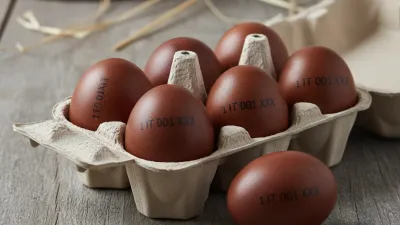
- The Ethogram and Farming Method: The code stamped on the shell is unequivocal. Favouring codes 0 (organic) or 1 (free-range) guarantees that the animal has been able to express its natural behaviours. Territorial note: Eggs from genuine zero-mile supply chains, such as those from the Lazio countryside, often present yolks whose colour varies physiologically according to the season. A more orange yolk in spring (greater availability of fresh grass) and a yellower one in summer/winter is the unmistakable sign of a truly natural and non-standardised farm.
- Ovomucin Structure (Freshness): An Extra Fresh egg presents a dense and viscous albumen fraction that remains compact around the yolk without wateriness, and a taut vitelline membrane that maintains the yolk in a spherical dome shape.
- Shell Structural Integrity: A clean shell (never washed with water), thick and free of micro-lesions, is essential for the microbiological safety of the product.
Conclusion: Awareness Beyond Colour
It is necessary to emancipate oneself from visual preconceptions imposed by habit. A chromatically intense yolk is not the definitive certificate of a “free-range” egg, just as a pale hue does not signal a nutritional deficit. Colour reflects exclusively a lipid balance of pigments, a parameter that the industry can easily add to indulge unfounded aesthetic preferences.
The correct approach to agricultural raw materials requires a shift in perspective. Upon opening, evaluate the structural compactness and the integrity of the membranes. At the time of purchase, however, rely on traceability: the shell code and the identity of the producing farm will offer you the only objective guarantee for an ethical, healthy, and gastronomically high-profile choice.