Egg Storage Protocols: Refrigeration vs Ambient
Resolve the debate on how to store eggs correctly. Discover the biochemical rationale behind UK/EU regulations and the 4 golden rules for domestic preservation.
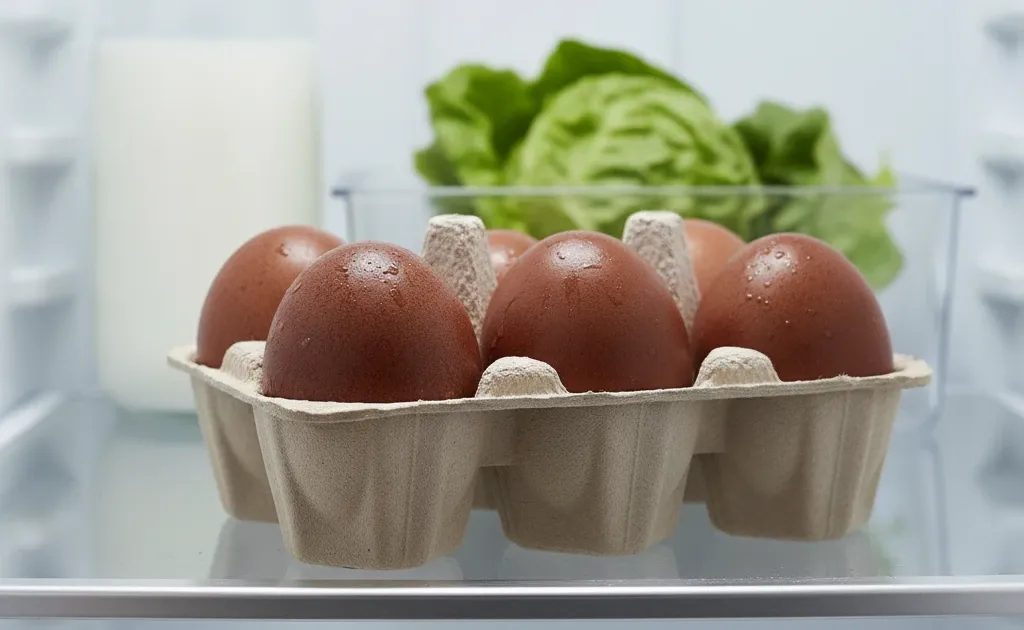
Introduction: Navigating the Storage Paradox
Upon entering a supermarket, you will likely find eggs displayed on ambient shelves, seemingly indifferent to the climate. Yet, the moment you return home, a combination of culinary instinct and inherited wisdom often dictates they be placed immediately in the refrigerator. This apparent contradiction creates one of the most frequent enquiries in food science: what is the technically correct way to store eggs?
The ambiguity is understandable, but the solution is singular, rooted in precise biochemical principles and rigorous regulatory frameworks. This guide serves as the definitive authority on the subject.
We shall examine why storage protocols shift from the point of sale to the domestic kitchen, and provide four professional protocols to ensure your eggs maintain their organoleptic excellence. Our objective is clear: to maximise freshness, preserve structural integrity, and, above all, guarantee peak food safety from the farm gate to your table.
Ambient Retail: The Logic Behind Room-Temperature Display
The primary factor to understand is that the sale of eggs at ambient temperature is not a logistical convenience, but a requirement mandated by European and UK hygiene regulations (Regulation EC No 853/2004). The logic underpinning this law is as ingenious as it is simple: the prevention of condensation.
The egg possesses an extraordinary natural biological barrier known as the cuticle (or “bloom”)—an invisible, microscopic film that envelopes the shell. This proteinaceous layer performs a vital function: it seals the thousands of pores on the shell, inhibiting the ingress of external pathogens such as Salmonella and retarding the internal rate of moisture evaporation.
What would occur if eggs were sold in a refrigerated state? During the transit from the cold-chain environment of the shop to the warmer ambient air of a vehicle or home, the cold egg would immediately develop condensation on its surface. This moisture would catastrophically compromise the protective cuticle, effectively “washing” it away and transforming the porous shell into a fertile conduit for bacterial proliferation.
To mitigate this risk, legislation dictates a constant storage temperature throughout the supply chain. Ambient display ensures that eggs do not suffer dangerous thermal shocks before reaching the consumer’s hands.
The Domestic Transition: Why Refrigeration is Essential
Once the eggs have transitioned to your home, the environmental context shifts. They are no longer subject to transport-related thermal fluctuations. At this stage, the primary objective becomes the retardation of natural enzymatic decay and the inhibition of bacterial development. In this regard, the refrigerator is your most effective ally.
Maintaining a constant, low temperature (ideally around 4°C) operates on two fronts:
- Retarding Senescence: Low temperatures slow the chemical and enzymatic processes that cause an egg to lose its structural tension. The albumen remains viscous, the yolk remains turgid, and the flavour profile is preserved for significantly longer. A refrigerated egg can remain technically fresh for 3 to 4 weeks, often exceeding its ambient shelf life.
- Bacterial Inhibition: Should any pathogens be present on the shell, despite the cuticle, refrigeration effectively halts or drastically slows their multiplication, ensuring the egg remains safe for consumption.
The rule is unequivocal: eggs are sold at ambient temperature to preserve the cuticle, but once home, they should be refrigerated immediately.
The Four Golden Protocols for Optimal Preservation
Refrigeration is the first step, but to achieve professional-grade preservation, one must follow these four specific protocols.
1. The Middle Shelf, Not the Door
Most domestic refrigerators feature a designated egg rack within the door. Ironically, this is the least suitable location for storage. The door is the most thermally unstable part of the appliance, subject to frequent thermal fluctuations every time it is opened. These variations can trigger micro-condensation on the shell and accelerate the breakdown of the internal proteins. The Solution: Store your eggs on the middle shelf, where the temperature is most stable and consistent.
2. Retain the Original Packaging
The cardboard or moulded pulp carton is not merely transport packaging; it is a sophisticated storage vessel. The original carton provides triple protection:
- Mechanical Protection: It buffers against physical impacts that could cause micro-fractures.
- Olfactory Isolation: Because the shell is porous, eggs can easily absorb “off-flavours” from pungent foods like strong cheeses or onions. The carton acts as a barrier.
- Cross-Contamination Barrier: It prevents any environmental bacteria on the shell from coming into contact with other foodstuffs. Furthermore, the carton retains vital traceability data and the ‘best before’ date.
3. Orientation: Pointed End Down
You may have noted that eggs in commercial cartons are always positioned with the more pointed end facing downwards. This is an intentional structural choice. The air cell is located at the blunt end of the egg. Storing the egg in this orientation ensures the air cell remains at the top, keeping the yolk perfectly centred and away from the air pocket. This minor adjustment helps preserve the internal geometry and freshness of the egg.
4. The Prohibition of Washing
Should you notice a slight soiling of the shell, you might be tempted to rinse it under the tap before storage. This must be avoided at all costs. Washing the egg destroys the protective cuticle, the natural barrier we discussed earlier. If the shell requires cleaning, use a dry cloth or paper towel to gently abrade the surface. If moisture is absolutely necessary, only wash the egg immediately prior to use.
Conclusion: The Cold Chain Begins at Home
The debate is officially resolved. Egg storage is a strategic partnership between the producer and the consumer. The supply chain maintains an ambient environment to protect the cuticle until the point of purchase. Once you cross your threshold, the responsibility of bio-preservation passes to you.
You are the architect of the domestic “cold chain.” Placing your eggs in the refrigerator—correctly positioned on the middle shelf, in their original carton, and pointed end down—is the fundamental act that ensures prolonged freshness, culinary excellence, and absolute safety for your table.